


By using our website, you agree to the use of cookies as described in our Cookie Policy
How Much House Can You Afford in Nashville Right Now?
Most people chasing Nashville real estate think it's all about the purchase price. Look at the listing, compare it to your savings, call it good. But the mortgage lender sees something else — and if you don't, you're setting yourself up for disappointment. Affordability isn't just about what's on the MLS. It's about what you can sustain month after month without gutting your cash flow or ignoring the fact that houses need upkeep.

Here's what matters. If you're planning to buy in Music City, great. Just don't treat approval limits like free passes. Every dollar borrowed should fit your actual budget. Every expense needs a place in your monthly plan. And every affordability decision should be grounded in how the numbers work — not just how the neighborhood feels on a Saturday tour.
What Lenders Actually Approve You For
Banks will hand you a number. Pre-approval letters look official. But what they're really saying is this: based on your income and credit, we think you can handle X amount of debt. That's not the same as what you should borrow. Lenders use formulas that cap housing costs at roughly 28% of your gross monthly income, with total debt obligations hitting no more than 36%.
If your household brings in $8,000 a month before taxes, that puts your maximum housing payment around $2,240. Sounds workable — until you factor in property taxes, homeowners insurance, possible HOA fees, and the reality that your gross income isn't what lands in your account. What the bank approves and what keeps your finances breathing room are often two different things.
The Numbers Behind Nashville Pricing
Nashville's median home price sits near $450,000 as of early 2024. That's a jump from where it was just a few years back, and inventory hasn't kept pace with demand. Popular pockets like East Nashville or The Gulch push well past that median. Suburbs like Mount Juliet or Smyrna offer more house per dollar, but you're trading proximity for space.
If you're aiming for that $450,000 price point with a 20% down payment, you're looking at $90,000 upfront plus closing costs. Monthly payments with current interest rates hovering around 6.5% would land somewhere near $2,270 for principal and interest alone. Add taxes, insurance, and maintenance reserves, and you're easily over $2,800 a month. That's before utilities or any HOA dues enter the picture.
Down Payments Aren't One Size Fits All
Twenty percent down is the gold standard. It kills private mortgage insurance and gives you better loan terms. But plenty of buyers go in with 5% or even 3%, especially first-timers using FHA or conventional programs that allow lower entry points. The tradeoff? Higher monthly costs and PMI tacked on until you hit 20% equity.
Closing costs are another chunk most people underestimate. Expect anywhere from 2% to 5% of the purchase price. On a $450,000 home, that's $9,000 to $22,500 you'll need liquid and ready at the table. Sellers sometimes cover part of it, but don't count on that in a competitive market where cash offers and waived contingencies win out.
Income Ratios Only Tell Half the Story
You might hit the lender's debt-to-income requirements and still feel stretched. Why? Because gross income doesn't account for retirement contributions, health insurance premiums, daycare, student loans that aren't in deferment, or the fact that emergencies happen. A roof replacement in year two isn't theoretical — it's a $12,000 bill you didn't budget for.
Smart buyers reverse-engineer affordability. Start with your take-home pay, subtract fixed costs and savings goals, then see what's left for housing. If the mortgage eats up more than a third of your net income, you're walking a tightrope. One job loss or major repair and the whole setup crumbles.
What Drives Your Monthly Payment Higher
- Interest rates: A half-point swing can add or subtract $150 from your monthly bill, which compounds to tens of thousands over the life of the loan.
- Property taxes: Nashville's aren't the worst, but they're not negligible either. Budget around 1% to 1.5% of your home's value annually.
- Homeowners insurance: Expect $1,200 to $2,000 a year depending on coverage and the home's age.
- HOA fees: Common in newer builds and condos, these can run $100 to $400 monthly and aren't optional.
- PMI: If you put down less than 20%, tack on another $100 to $300 a month until you build enough equity to drop it.
Where Your Money Goes Furthest
Not every Nashville zip code costs the same. The Gulch and 12 South? You're paying for location and walkability, often north of $600,000 for anything decent. Donelson, Antioch, and Madison sit closer to $300,000 to $400,000 and still offer solid access to the city. Venture into the suburbs — Hendersonville, Smyrna, Lebanon — and you'll find larger lots and newer construction without the premium.
Tradeoffs exist everywhere. Close-in neighborhoods mean shorter commutes and higher prices. Outer zones mean space and savings but longer drives and fewer amenities within walking distance. Know what you're optimizing for before you start touring homes.
What Kills Deals Before They Start
- Weak pre-approval: Sellers won't take you seriously without one, and half the time those letters expire or get pulled when underwriting digs deeper.
- Low down payment with high competition: Cash buyers and 20% down offers beat 3% FHA bids almost every time in hot markets.
- Ignoring closing timelines: If you can't close in 30 days, someone else will, and the seller moves on.
- Maxing out your budget: Bid at your ceiling and you'll have zero cushion for inspections, repairs, or negotiations.
- Skipping the inspection: Waiving it to win the offer might work until you discover $15,000 in foundation issues three months in.
The Gaps Most Buyers Miss
You can afford the mortgage. Great. But can you afford the maintenance? HVAC systems fail. Water heaters leak. Roofs wear out. A general rule is to set aside 1% to 2% of your home's value annually for upkeep. On a $450,000 house, that's $4,500 to $9,000 a year you should be banking, not spending.
Then there's the lifestyle creep. Bigger house means higher utility bills. More square footage means more furniture, more lawn care, more everything. Buyers who stretch for the nicest house they qualify for often find themselves cutting vacations, delaying car repairs, or raiding savings just to keep up.

What You Control Versus What You Don't
- Your credit score: A jump from 680 to 740 can save you thousands in interest. Clean up your report before you apply.
- Your debt load: Pay down credit cards and car loans before house hunting. Lower obligations mean higher approval amounts.
- Your down payment: Save more, borrow less, and avoid PMI while shrinking your monthly nut.
- Your timeline: Rushing into a buy because rates might rise or inventory might shrink leads to bad decisions. Wait for the right fit.
- Your agent: Local expertise matters. Someone who knows Nashville neighborhoods, pricing trends, and which streets flood saves you time and money.
Running the Real Numbers
Let's say you earn $100,000 a year. After taxes, retirement, and insurance, you're netting around $6,000 a month. Fixed costs — car, food, childcare, student loans — eat $3,000. That leaves $3,000 for housing, savings, and discretionary spending. If your mortgage is $2,800, you've got $200 left for everything else. That's not breathing room. That's financial suffocation.
A better play? Aim for a home where the all-in monthly cost sits around $2,200. You keep $800 for emergencies, repairs, and quality of life. You're not house-poor. You're not gambling on nothing going wrong. And when the water heater dies, you handle it without panic. You can use a mortgage calculator to run different scenarios and see what fits your actual budget.
Strategies That Keep You in the Game
- Pre-approval with multiple lenders: Rates and terms vary. Shop around and use competing offers as leverage.
- Bidding below max approval: Just because you're approved for $500,000 doesn't mean you should spend it. Build in a buffer.
- Locking your rate early: If rates are climbing, lock as soon as you're serious. If they're falling, float and watch the market.
- Negotiating seller concessions: Ask sellers to cover part of closing costs or include a home warranty. It's cash you keep in your pocket.
- Using a local lender: They close faster and understand Nashville's quirks better than national banks processing loans in bulk.
Keeping Your Head When Others Lose Theirs
Nashville's market is hot. Homes move fast. Bidding wars happen. But FOMO isn't a strategy. Overpaying because you're scared of missing out leads to regret, not equity. The right house at the right price will come. It might take three months. It might take six. But rushing into a bad deal because inventory is tight is how people end up underwater or stuck in homes they can't afford.
Affordability isn't static. It shifts with interest rates, job stability, family size, and long-term goals. Nail down what you can handle today without gambling on promotions or windfalls that may never come. Because when the market corrects or life throws a curveball, the house you barely afford becomes the anchor dragging you under. At that point, no amount of Nashville charm makes the math work.
Ready to Find Your Nashville Home?
We know the Nashville market inside and out, and we're here to help you make smart, confident decisions every step of the way. Let's talk about your goals, your budget, and how we can get you into a home that truly fits your life. Call us at 615-945-3590 or contact us to start your home search with a team that puts your needs first.
‹ Back
Recent Posts
-
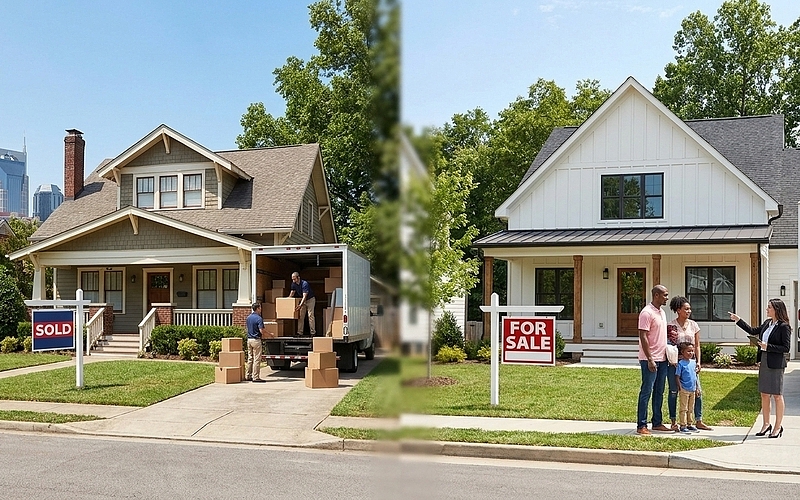
Can You Buy & Sell a Home at the Same Time in Nashville?
October 16, 2026
-
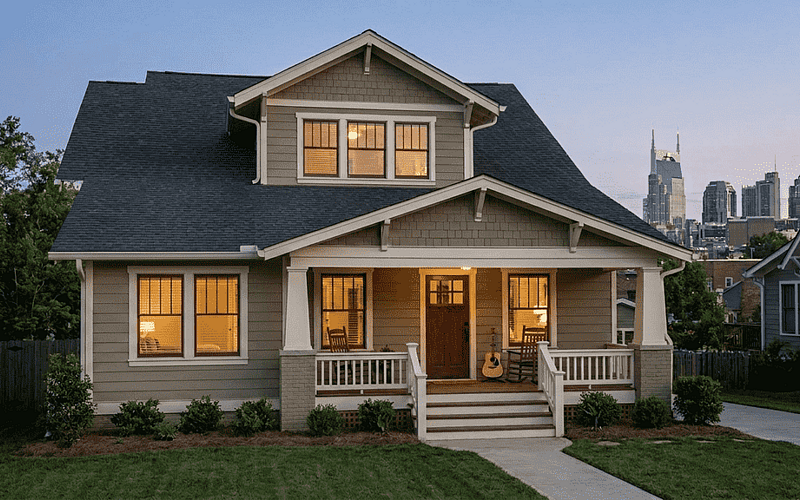
When Is the Right Time to Sell Your Home in Nashville?
October 2, 2026
-
What Should You Look for When Touring Homes in Nashville?
September 18, 2026
-

How Much House Can You Afford in Nashville Right Now?
September 4, 2026
-

Do You Need a Real Estate Agent to Sell in Nashville?
August 21, 2026